

Keplr wallets emptied by an attacker and a rescue
Keplr wallets using Google or Apple sign-in hit by Web3Auth breach; recovery transfers complicate losses
Keplr says a Web3Auth flaw exposed private keys for some Google and Apple sign-in accounts. Unauthorised transfers have been reported, but Web3Auth says it also moved vulnerable funds into recovery wallets with Keplr’s help. The amount stolen remains unconfirmed.
What to do
- Stop deposits into the affected account.Keplr’s warning covers accounts created with Google or Apple sign-in. It also says not to re-import or recreate that account elsewhere.
- Secure funds you can still move.Follow Keplr’s guidance to move remaining liquid funds, meaning funds that are not staked or locked, to an account secured by a recovery phrase or hardware wallet. If access is blocked, follow official updates rather than an unsolicited workaround.
- Check missing funds against official recovery information.Use Web3Auth’s recovery thread[7] and Keplr’s confirmation[8]. Do not assume an unfamiliar destination proves theft, or that a recovery transfer means repayment is complete.
- Ignore recovery offers sent privately.Follow the companies’ official updates. Never give anyone your recovery phrase: Keplr says it will never contact you to ask for it[9].
What happened
If you created a Keplr cryptocurrency wallet using your Google or Apple account, stop sending money to it. Keplr says a flaw at Web3Auth, its sign-in provider, exposed some users’ private keys. It has received reports of unauthorised transfers and paused those sign-in options. Keplr’s initial warning[1] identifies the accounts at risk.
There is a complication for anyone looking at an empty balance. Web3Auth says it also moved vulnerable funds for protection, with Keplr’s assistance. On 8 November, the companies identified recovery addresses so users could distinguish those transfers from suspected theft. The Defiant reports that Keplr confirmed the list.[2]
- HARD assessment
- High Reported unauthorised transfers and exposed wallet keys
- Accounts outside the warning
- Wallets created with a recovery phrase or hardware wallet, according to Keplr
- Recovery holdings
- About US$5.6 million across 12 addresses, according to The Block’s 8 November review
- Confirmed theft total
- Not established
The full story2 more sections
Who is affected
The warning concerns how you created your Keplr account: some accounts made through Google or Apple sign-in are exposed. Keplr says accounts created with a recovery phrase or hardware wallet are unaffected by this incident. Its follow-up guidance[4] says staked and locked assets take longer to secure.
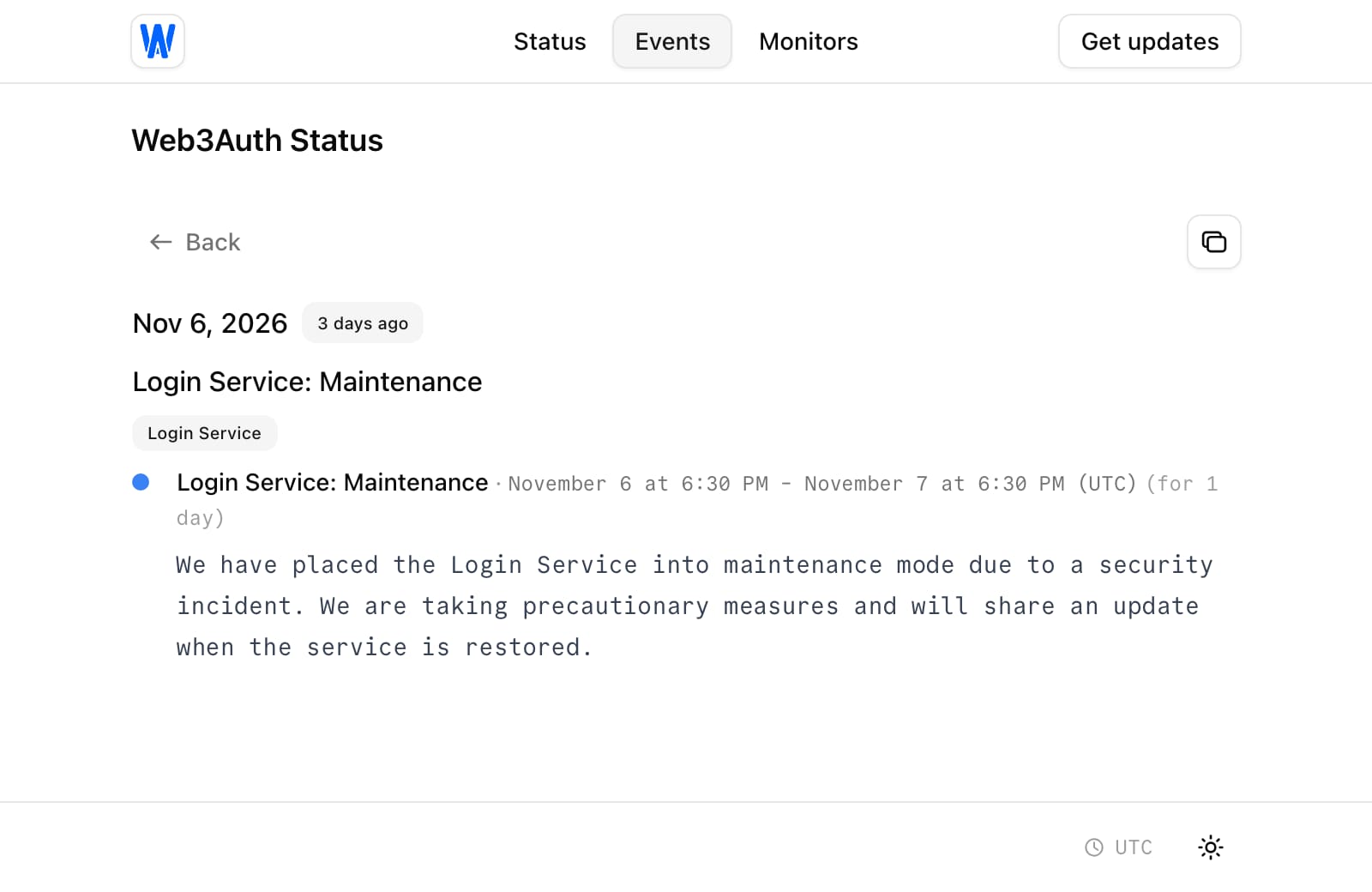
Web3Auth’s security incident notice[5] says it placed its login service into maintenance. That notice does not confirm a fix or restoration. The material reviewed for this draft provides no verified fixed version for users to install.
Where the money went
The Defiant’s first report[6] described a 7 November transfer involving claims on 2,265.59 staked ATOM from six accounts. One holder reported theft. Its follow-up[2] established that the destination appeared on both companies’ recovery lists. That changes how that particular transfer should be understood.
Separately, The Block counted about US$5.6 million in the published recovery addresses. Web3Auth says recovered funds are safe, but that is not confirmation that owners have received them back. The companies’ 8 November address updates did not provide a return procedure. Nor is there a confirmed total for what the attacker took.
Timeline
-
HARD publishes its article, at High.
After the news
- How to update every device phones, computers, browsers, TVs and routers
References13
- ^ Keplr (). “Initial warning about Google and Apple login accounts”. Official statement read through pwn.watch’s reproduction; direct X retrieval failed.
- ^ The Defiant (). “Keplr Confirms Web3Auth Recovery Addresses After Wallet Breach”. Original headline and standfirst read; full report read in the KuCoin syndication listed below.
- ^ The Block (). “Web3Auth says it frontran hackers by moving $5.6 million out of exposed Keplr wallets”. Full report read; establishes its US$5.6 million recovery-address valuation and the absence of a confirmed theft total.
- ^ Keplr (). “What this means for Keplr users”. Official guidance reproduced by pwn.watch and reported by The Defiant; direct X retrieval failed.
- ^ Web3Auth (). “Login Service: Maintenance”. Directly read official notice attributing login-service maintenance to a security incident; it contains no restoration confirmation.
- ^ The Defiant (). “Cosmos Batch Moves 2,266 Staked ATOM From Six Accounts”. Original headline and standfirst read; full report read in the KuCoin syndication listed below.
- ^ Web3Auth (). “Update on Keplr asset recovery”. Recovery-address announcement reported by The Block and The Defiant; direct X retrieval failed.
- ^ Keplr (). “Confirmation of Web3Auth recovery addresses”. Official confirmation linked and reproduced in The Defiant’s syndicated report; original post needs an editor’s direct check.
- ^ Keplr (). “Privacy & Security”. Directly read official guidance on recovery-phrase secrecy; its general reset instructions should not override incident-specific advice.
- The Defiant via KuCoin (). “Cosmos Batch Moves 2,266 Staked ATOM From Six Accounts — syndicated report”. Full text establishes the six-account batch, 2,265.59 staked ATOM and one holder’s theft report.
- The Defiant via KuCoin (). “Keplr Confirms Web3Auth Recovery Addresses After Wallet Breach — syndicated report”. Full text identifies the batch destination as a recovery address and says the announcements supplied no return procedure.
- pwn.watch (). “Web3Auth infrastructure breach exposed private keys for some Keplr Google/Apple-login wallets”. Read reproductions of the companies’ 6–7 November statements, including the instruction not to re-import affected accounts.
- The Hacker News (). “Web3Auth Flaw Exploited to Steal Keplr Crypto, Provider Empties Other Wallets for Safety”. Article text read through search retrieval; excluded as evidence for developments after the requested 8 November cutoff.
Situation Room articles are updated as events develop: updates are added to the timeline, and never edited away. Follow them by email or RSS.