

Chrome needed three security updates in nine days
Chrome patches a flaw already used in attacks, with two more security updates since
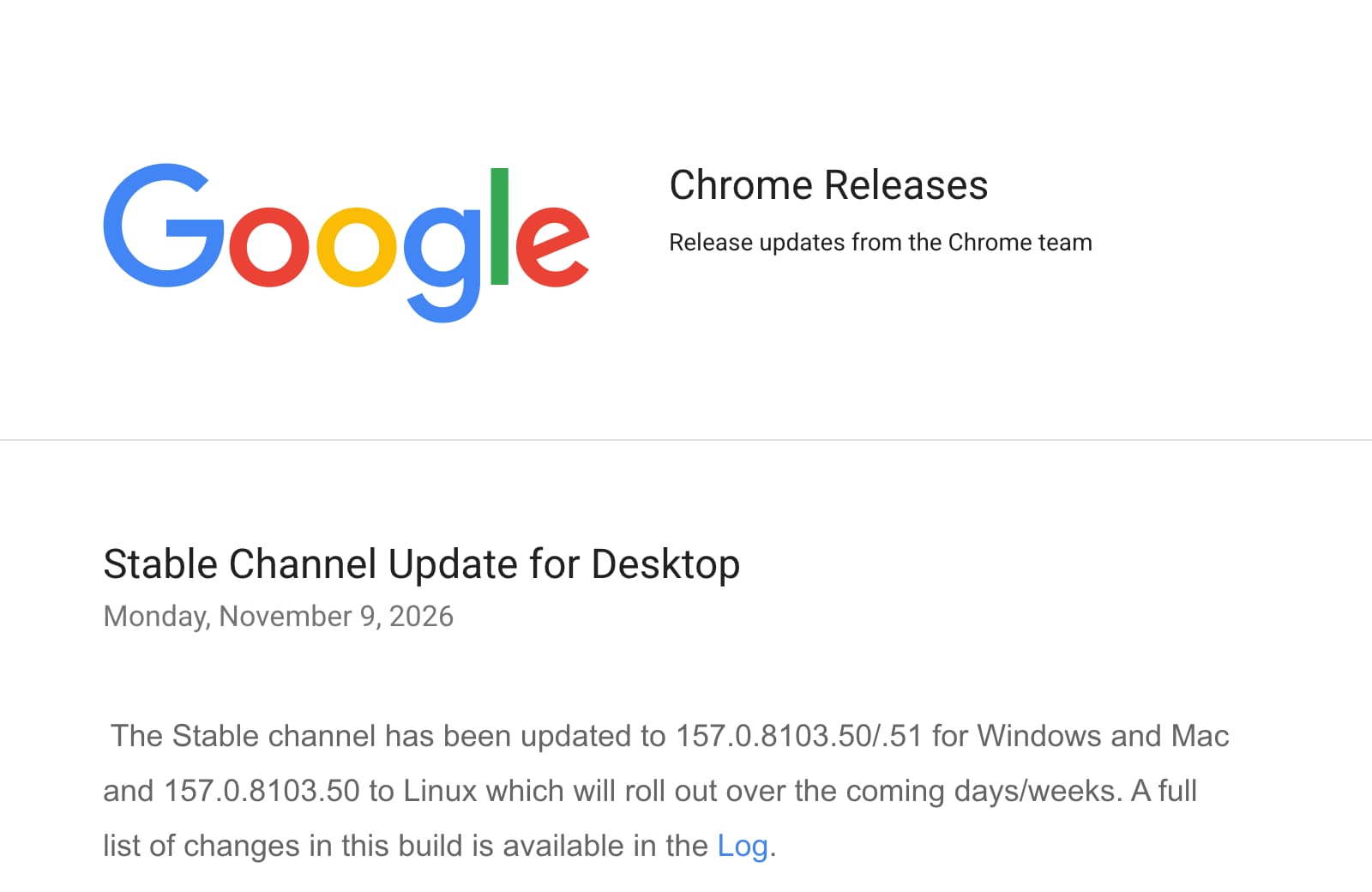
Google says an exploit for CVE-2026-125350, a memory-handling flaw it rates High, exists in the wild, and released fixes for desktop Chrome and Android on 9 November. A further desktop update on 11 November contains 83 security fixes, including five rated Critical, with a corresponding Android release. Chrome 158 followed on 17 November with 204 more security fixes. Google has not identified the attackers or their targets.
What to do
- Update Chrome on each computer.On Windows or Mac, open the three-dot menu, choose Help, then About Google Chrome. Let the check finish and select Relaunch if offered. If Chrome doesn't offer an update yet, check again in a day or two, because Google releases each one to people over days to weeks. On Linux, update through the software package manager, then restart Chrome. Computer instructions[8].
- Update Android separately.Open Google Play, tap your profile, then Manage apps & device. Under Updates available, find Chrome and tap Update. You can check its version inside Chrome under Settings, then About Chrome. Android instructions[10].
- Include the people you look after.Walk a parent through the check or do it together. For a work computer managed by IT, ask them to confirm that the exploited flaw and the subsequent security fixes are covered. If an update fails, ask for help resolving it rather than treating the check as complete.
What happened
If your family uses Chrome on computers or Android devices, check for an update today. Google released a fix on 9 November for a flaw attackers were already exploiting. Two days later, it released another security update. Updating early last week is a reason to check again. Malwarebytes reported the first release[1] and the follow-up[2].
The exploited flaw is CVE-2026-125350, a memory-handling mistake in the part of Chrome that processes XML, a format for structured information. Google rates it High and says an exploit exists in the wild. Its advisory does not identify the attackers, victims or scale of the attacks. Google's security notice[3].
- Exploited flaw
- High Google's severity rating for CVE-2026-125350
- First desktop fix, 9 November
- Windows and Mac: 157.0.8103.50 or 157.0.8103.51. Linux: 157.0.8103.50.
- Follow-up desktop release, 11 November
- Windows and Mac: 157.0.8103.78 or 157.0.8103.79. Linux: 157.0.8103.78.
- Chrome 158, 17 November
- Windows and Mac: 158.0.8127.36 or 158.0.8127.37. Linux: 158.0.8127.36.
- Android
- First fix: 157.0.8103.50. Follow-up: 157.0.8103.78.
The full story2 more sections
Who is affected
The releases cover Chrome on Windows PCs, Macs, Linux computers and Android phones and tablets. Google says the Android releases carry the corresponding desktop security fixes unless it states otherwise. Check each device you look after, including a parent's laptop or a spare Android tablet. These version numbers apply to those releases; they are not an iPhone or Chromebook update checklist.
The Canadian Centre for Cyber Security records that CISA added this flaw to its Known Exploited Vulnerabilities catalogue on 10 November. That reinforces the reason to act promptly, but it does not establish that any particular family's device has been compromised. Canada's advisory[7].
Why last week's update may not be the last
The 9 November update addressed the exploited flaw. The 11 November desktop release added 83 security fixes, five rated Critical. Google's later notice does not report active exploitation of those newly listed flaws. The two releases should not be confused: the later update is another reason to install the newest version available, rather than stop at the first fixed build. Google's follow-up advisory[4].
There is also a practical catch. Chrome can download an update while you work, but the computer's browser needs to restart to apply it. A Relaunch button is unfinished business. Google's update instructions[8].
Google then moved Chrome to version 158 on 17 November, with 204 security fixes, and says it will reach people over the coming days and weeks. That notice does not report any of those flaws being used in attacks. If Chrome offers you 158, take it. Google's 17 November release note[9].
Timeline
-
HARD publishes its article, at Critical.
After the news
- Chrome updates the latest version, and how to update
- Android updates the latest version, and how to update
References12
- ^ Malwarebytes (). “Update Chrome now to fix a flaw attackers are exploiting”. Reports the initial desktop and Android updates and the limited public information about attacks.
- ^ Malwarebytes (). “Google pushes second Chrome update this week”. Reports the 11 November follow-up release and its security-fix count.
- ^ Google (). “Stable Channel Update for Desktop, 9 November 2026”. Confirms exploitation, High severity, initial fixed desktop versions and current discovery credits.
- ^ Google (). “Stable Channel Update for Desktop, 11 November 2026”. Lists follow-up desktop versions and 83 security fixes, including five Critical entries.
- ^ Google (). “Chrome for Android Update, 9 November 2026”. Identifies Android 157.0.8103.50 and its corresponding desktop security fixes.
- ^ Google (). “Chrome for Android Update, 11 November 2026”. Identifies Android 157.0.8103.78 and corresponding desktop security fixes.
- ^ Canadian Centre for Cyber Security (). “Google security advisory (AV26-1140), Update 1”. Confirms affected desktop versions, exploitation and CISA catalogue addition on 10 November.
- ^ Google. “Update Google Chrome: Computer”. Documents update checks, version checks, relaunching and Linux package-manager updates.
- ^ Google (). “Stable Channel Update for Desktop, 17 November 2026”. Chrome 158 reaches the stable channel with 204 security fixes; no exploitation reported.
- ^ Google. “Update Google Chrome: Android phone and tablet”. Documents Play Store updates and the About Chrome screen on Android.
- The Register (). “Chrome zero-day whack-a-mole continues as 2026 tally hits 8”. Corroborates exploitation; its discovery credits and separate XML-flaw account differ from Google's current notice.
- Google. “Chrome Releases: November 2026”. Shows subsequent early Stable Chrome 158 releases to limited audiences; informs the advice to accept newer official updates.
Situation Room articles are updated as events develop: updates are added to the timeline, and never edited away. Follow them by email or RSS.