

Fake CEOs, bogus lawyers and an alleged US$129 million theft
Three men charged over alleged US$129 million fake CEO and lawyer scam
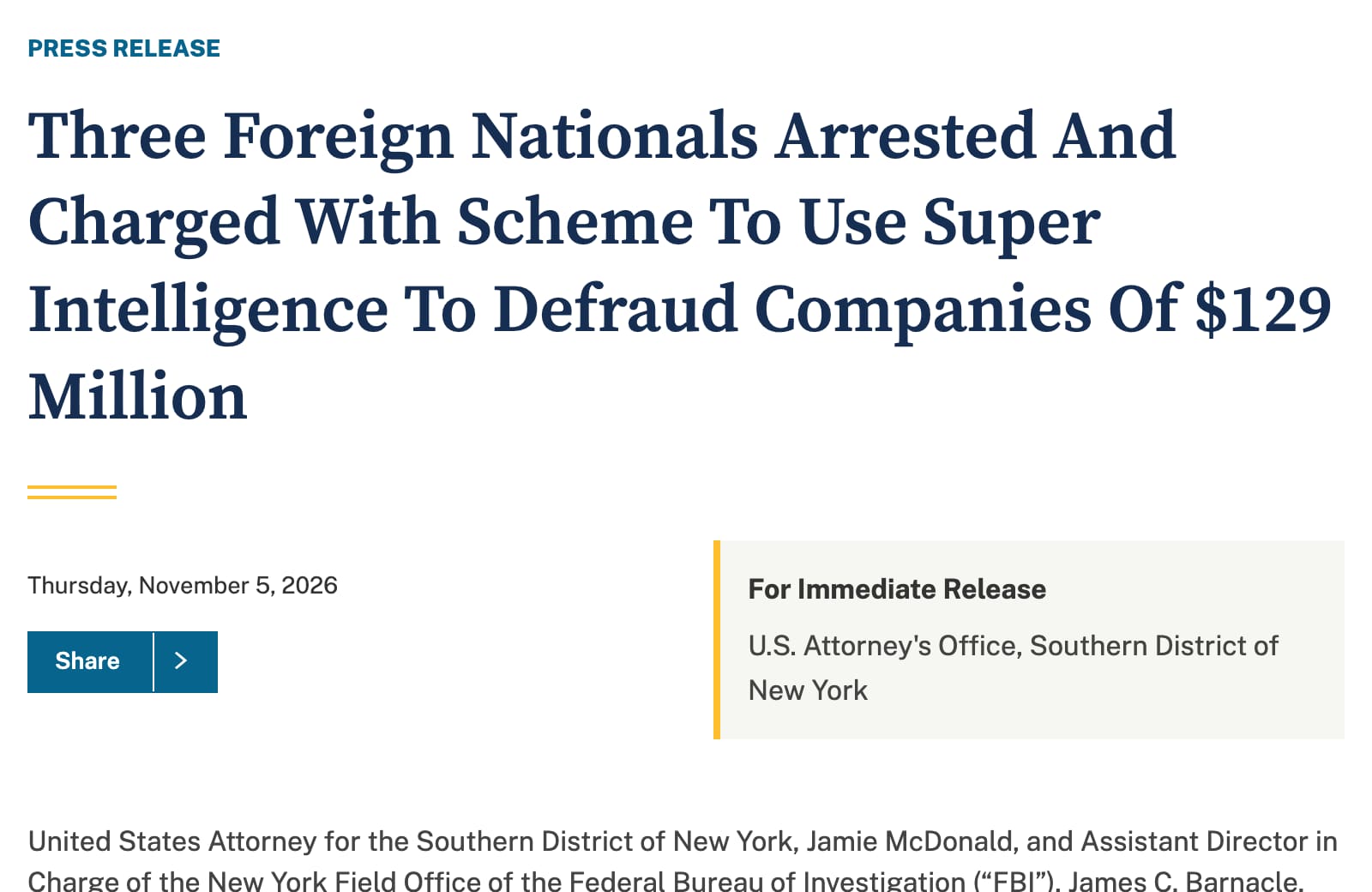
US prosecutors allege the group impersonated executives and lawyers to persuade employees to transfer money for supposedly confidential transactions between 2024 and 2026. Three men were arrested in Europe, and extradition requests were pending when charges were announced on 5 November. The allegations have not been proven.
What to do this week
- Call back through a trusted route.Pause an unexpected payment instruction. Contact the executive using a number already in your records, or reach the lawyer through the firm’s independently verified switchboard. Confirm the purpose, amount and destination account. Do not use a number supplied in the suspicious message. The FBI recommends independently checking payment requests and changes to account details.[4]
- Keep payment approvals in place.Require a second authorised person to check unusual or large transfers and changes to bank details. Do not waive that check because a caller says the deal is confidential. ASIC recommends approval processes for large transfers and payment-detail changes.[5]
- Give staff permission to stop.Tell finance staff, assistants and family-office colleagues that checking an instruction from the boss is expected. Agree who they should contact when a request involves secrecy, urgency or an exception to normal procedure.
- Call the bank immediately if money has moved.Report suspected fraud and ask the bank to contact the receiving bank urgently. Alert your finance and security leads. In Australia, report the incident through the reporting link in the Australian Cyber Security Centre’s guidance; US victims can report to the FBI’s Internet Crime Complaint Center.
What happened
If you approve payments for a business or family office, an unusual instruction from the boss deserves a separate check. US prosecutors allege that three men and their accomplices used artificial intelligence to impersonate executives and lawyers in a scheme that stole more than US$129 million from companies worldwide. The practical response: call back through contact details you already trust before authorising the transfer.
On 5 November, the US Justice Department announced charges against Jacob Soall, 41, Sharon Hazan, 54, and Guy Sheetrit, 42. Soall and Hazan had been arrested in Spain, and Sheetrit in the United Kingdom; extradition requests were pending. All three are presumed innocent unless proven guilty. The department’s announcement[1] describes alleged conduct between 2024 and 2026.
- HARD severity
- High Verify unusual payments independently
- Alleged loss
- More than US$129 million across the scheme
- Alleged impersonations
- Company executives and lawyers at major firms
- Case status
- Three defendants arrested; extradition requests pending at the announcement
The full story2 more sections
Why a familiar face is not enough
According to prosecutors, employees were approached by someone posing as their chief executive about a confidential financial transaction. Calls used imitations of the executive’s voice or image. The employee was then referred to a supposed lawyer, also an impersonator, who gave the payment instructions. The Record’s report[2] describes that sequence.
For the person being asked to pay, the apparent agreement between a boss and a lawyer is the important warning. In the alleged scheme, both identities belonged to the deception. Treat a referral supplied during an unexpected payment request as something to verify separately.
Secrecy deserves the same attention. Australian Cyber Security Centre guidance flags pressure to keep things secret, act immediately or bypass normal safeguards as reasons to stop and check. It recommends contacting the person or organisation separately using independently verified details. Its payment-fraud guidance[3] applies whether the request looks routine or comes from someone senior.
Who is affected
The organisations described by prosecutors span several industries: hospital systems, a bank, a financial technology company, a mutual fund company and a pet food business. The Justice Department lists an alleged US$11,578,474 loss at a UK financial technology company among its examples. It does not identify those organisations by name in the announcement.
For HARD readers, the people to brief are those who can approve or arrange a transfer: finance staff, executive assistants and family-office teams. Extend the same checking rule to anyone handling a parent’s bills or large payments. This is a precaution for those roles, not a claim that families or family offices were identified as victims in this case.
Timeline
-
HARD publishes its article, at High.
After the news
- Is this a scam? check a message, and every scam going round
References6
- ^ US Department of Justice (). “Three Foreign Nationals Arrested And Charged With Scheme To Use Super Intelligence To Defraud Companies Of $129 Million”. Primary announcement, updated 6 November: allegations, defendants, arrests, pending extradition, loss figures and presumption of innocence.
- ^ The Record (). “CEO-spoofing scammers used AI to help steal more than $100 million, feds say”. Corroborates the alleged impersonations; current page includes a defendant’s denial added on 9 November, after the draft cutoff.
- ^ Australian Signals Directorate’s Australian Cyber Security Centre (). “Protecting against business email compromise”. Reviewed 24 March 2023; supports independent verification, warning signs, staff procedures, immediate bank contact and Australian reporting.
- ^ FBI. “Business Email Compromise”. Supports independently checking payments and bank-detail changes, immediately contacting banks and reporting to IC3.
- ^ ASIC. “Protect your business and customers from scams”. Recommends trusted contact details and approval processes for large transfers and changes to payment details.
- Help Net Security (). “Trio accused of using deepfake CEOs and bogus lawyers to scam businesses out of $129 million”. Read through indexed article text after direct access failed; corroborates allegations but postdates the requested cutoff and supplies no unique draft claims.
Situation Room articles are updated as events develop: updates are added to the timeline, and never edited away. Follow them by email or RSS.