

An unpatched iPhone can be hacked without a tap
Infected websites and ads target unpatched iPhones with password and crypto-stealing malware
Report URI and iVerify identified attacks using Coruna and DarkSword, which exploit older iPhone software. Loading an infected page or ad can trigger an attack without another tap. The reports do not establish a campaign-wide infection count or total financial losses.
What to do this week
- Update each iPhone.Back it up, connect to power and Wi-Fi, then open Settings > General > Software Update. Install the latest update offered. Check a parent’s phone with them. Apple’s instructions[7] explain the process.
- Enable automatic installation.Under Software Update > Automatic Updates, turn on Automatically Install. Apple says installation happens overnight while the phone is charging and connected to Wi-Fi.
- Consider extra protection if you cannot update.Apple suggests considering Lockdown Mode[8] when updating is not possible. It is available from iOS 16 under Settings > Privacy & Security > Lockdown Mode. It restricts some apps and websites; read Apple’s explanation[9] before enabling it.
- Get help if you suspect infection.Ask a security specialist to assess the phone. Use another trusted device to change exposed passwords and get help securing any affected cryptocurrency wallet. Report URI warns that restarting may stop an active infection but cannot undo data theft.
What happened
An iPhone missing security updates can be attacked just by loading an infected webpage or advertisement. Researchers at iVerify and Report URI have traced campaigns delivering malware that targets saved passwords and cryptocurrency wallets. For families, the immediate job is to update every iPhone, including those belonging to parents you help look after.
In one case, iVerify says an employee’s phone was infected while they scrolled past a World Cup-themed Instagram ad. Its investigation, published on 21 October[1], describes attacks that begin when malicious content loads, without another tap or an app download.
- HARD level
- High Attacks observed
- Coruna route
- iOS 13 to 17.2.1
- DarkSword route
- iOS 18.4 to 18.7, using a modified P7 variant
- Immediate action
- Install the latest iOS update offered
The full story3 more sections
Who is affected
The researchers identify outdated iPhone software as the opening. Cryptocurrency owners have a particular reason to act, but the malware also targets passwords.
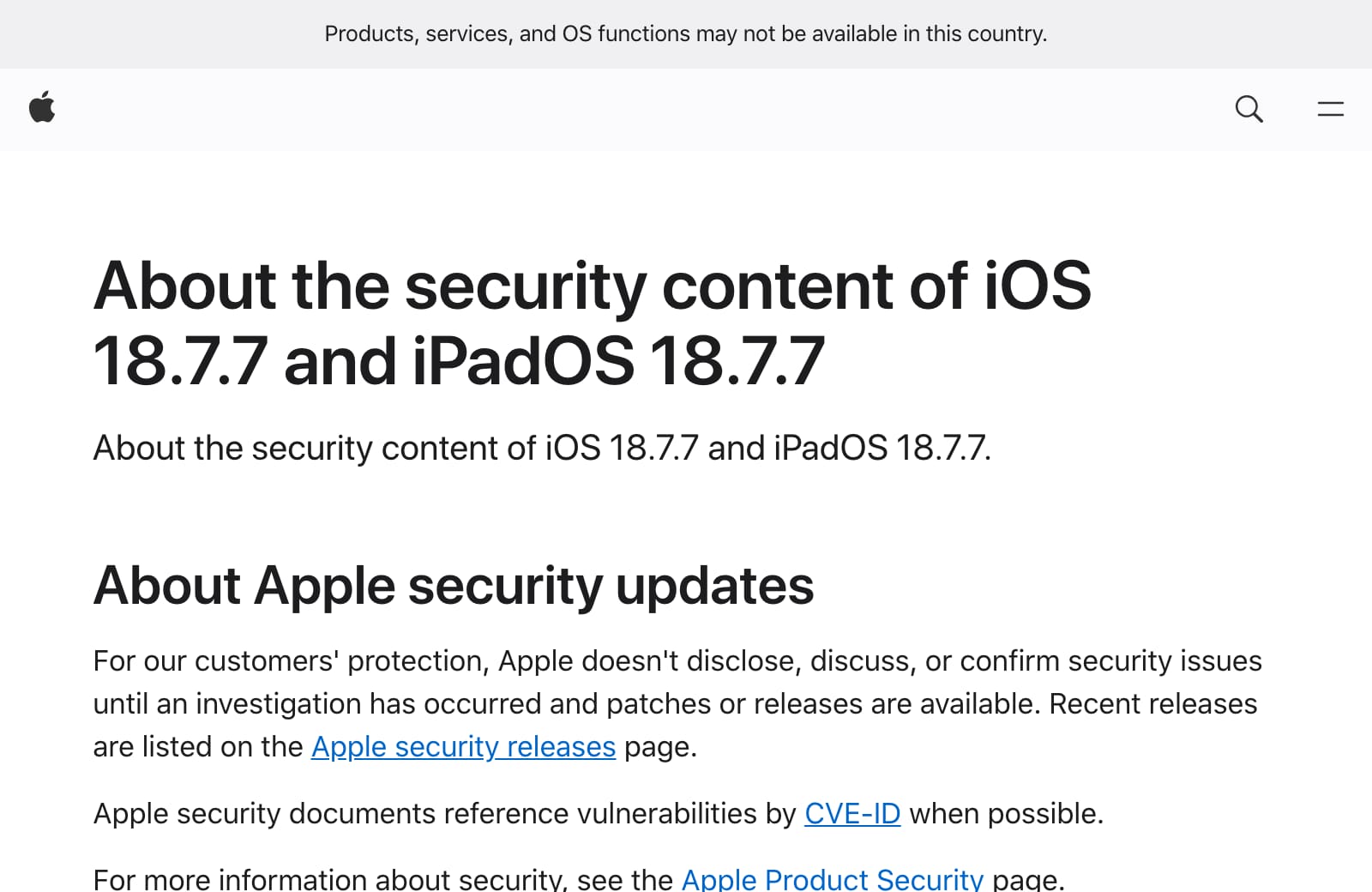
Apple has already shipped protections against these attack families. Its iOS 18.7.7 advisory[5] explicitly covers DarkSword: that release arrived on 24 March, and Apple says the associated fixes first shipped in 2025. That is historical patch information, not a recommendation to stop at 18.7.7. Install the newest update your phone offers.
Update, 18 November: Krebs on Security and The Record report that on 16 November attackers used a flaw in Optimizely, a tool for testing web pages, to serve the same Coruna and DarkSword kits to iPhone and iPad visitors on some of 178 busy websites. Optimizely says it is fixed; phones on current software are still the safe ones. Read the Optimizely story.
How ordinary websites became a route in
Report URI calls one delivery operation DeadTag. Websites were still loading code from advertising and analytics services whose domains had expired. Those domains changed hands, turning forgotten integrations into a way to reach visitors. The researchers also found directly compromised online shops.
The scale is still uncertain
Forbes reported on 22 October[6] that 248 websites were directly serving iPhone spyware, with an estimated eight million monthly visitors. It put the wider network at 6,600 sites and 49 million monthly visits. The researchers’ own reports give a wider traffic estimate of 135 million monthly visits. Those figures are unreconciled; none is a count of infected phones. The reports give no total losses.
Timeline1 update
-
HARD publishes its article, at High.
-
Update 1 · Update
Krebs on Security and The Record report that on 16 November attackers used a flaw in Optimizely, a tool for testing web pages, to serve the same Coruna and DarkSword kits through pages of some of the 178 organisations whose Optimizely code was compromised. Optimizely says it is fixed; phones on current software are still the safe ones.[3][4]
References9
- ^ iVerify (). “Dead Domains, Live Exploits: How Infected Ads and Expired Analytics Tags Deliver Coruna and DarkSword to iPhones”. Primary investigation describing the Instagram infection, delivery routes, data targeted and a 135 million monthly-visit estimate.
- ^ Report URI (). “DeadTag: How Forgotten Website Tags Became a Delivery Network for iPhone Spyware”. Primary research on expired domains, observed iOS targeting ranges, compromised shops and recovery advice.
- ^ Krebs on Security (). “Attackers Used Optimizely to A/B Test Malware on Top Websites”.
- ^ The Record (). “Website management platform Optimizely confirms hackers put malicious code into customer sites”.
- ^ Apple (). “About the security content of iOS 18.7.7 and iPadOS 18.7.7”. Confirms DarkSword protections, the release date and that associated fixes first shipped in 2025; includes an April rollout update.
- ^ Forbes (). “Hackers Are Serving Malware To iPhones Via Hundreds Of Infected Websites”. Original reporting behind the supplied lead; gives the 248-site subset and wider 6,600-site figures.
- ^ Apple (). “Update your iPhone or iPad”. Verifies the update path, backup advice and automatic installation requirements.
- ^ Apple (). “Update iOS to protect your iPhone from web attacks”. Official guidance on outdated iOS, web attacks, updates and considering Lockdown Mode when unable to update.
- ^ Apple (). “About Lockdown Mode”. Verifies availability from iOS 16, the settings path and restrictions on apps and websites.
Situation Room articles are updated as events develop: updates are added to the timeline, and never edited away. Follow them by email or RSS.