

Applebee’s left a database password in its app
Applebee’s app exposed customer data through a database password; company says flaw is fixed
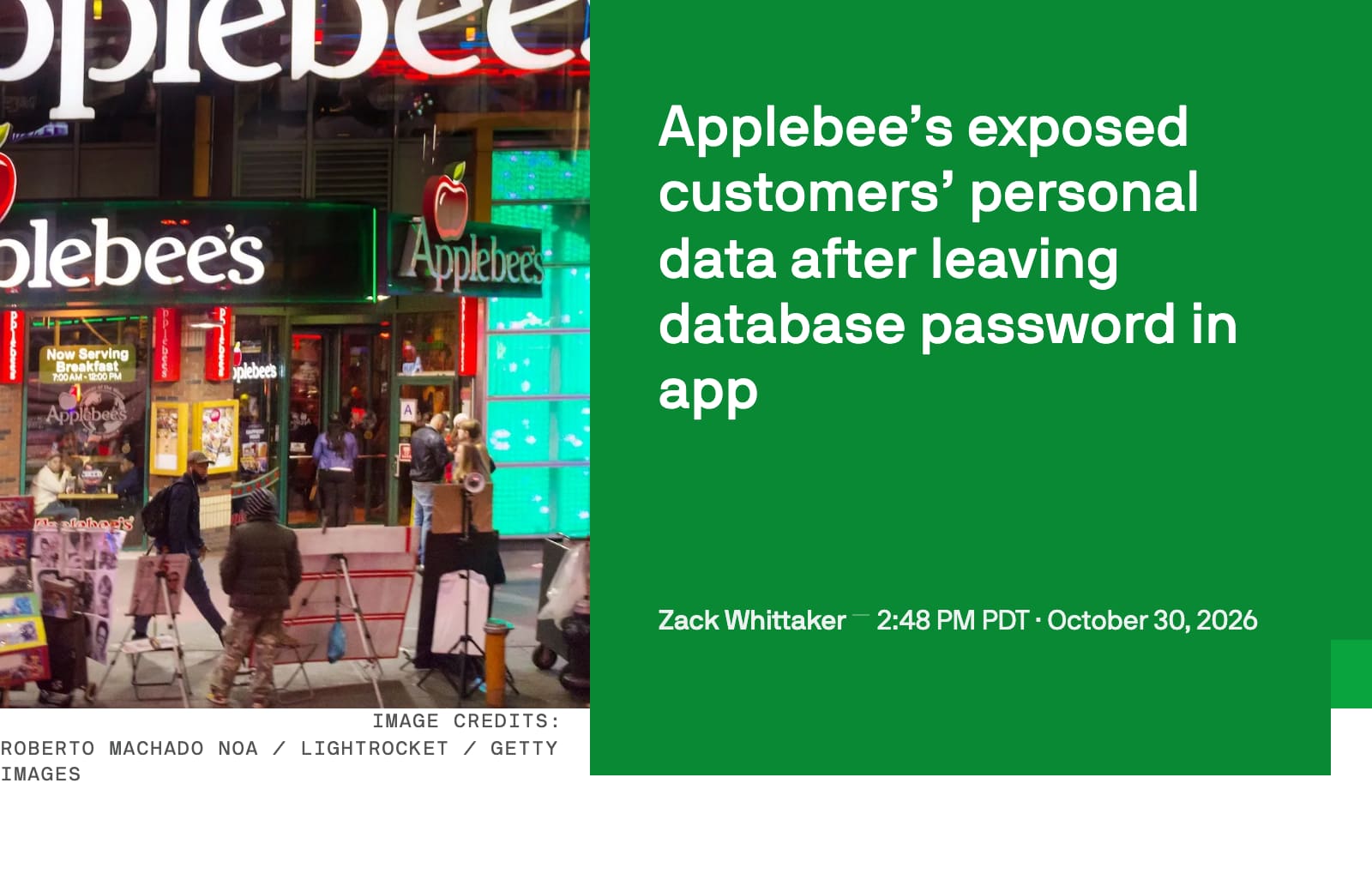
The database held contact details, birth dates and other personal information. Parent company Dine Brands says it found no evidence of unauthorised access and is still investigating.
What to do this week
- Check through Applebee’s directly.Visit its website yourself to look for updates. Use the official contact page[3] to ask whether your account was affected, which information was involved and whether you need to do anything.
- Verify before responding.Do not follow an unexpected message’s link to sign in or provide payment details. Contact the company using details you found independently. Do not let an urgent deadline rush you.
- Include the parents you look after.If they have an Applebee’s account, offer to check messages with them. Agree that they will pause and call you before responding to an unexpected request for money or account details.
- Act if you shared information with a scammer.Change any password you handed over, including on other accounts where you reused it. If you disclosed banking details or sent money, contact your bank promptly. These steps follow the NCSC’s recovery guidance[4].
What happened
If you have an Applebee’s account, check for company updates and take care with unexpected messages. A researcher found a database password inside the restaurant chain’s app that allowed access to customer information, according to TechCrunch’s 30 October report[1].
Applebee’s confirmed a fix on 29 October. Dine Brands said its investigation had found no evidence of unauthorised access and remained ongoing. That leaves open whether anyone else obtained the information.
- HARD level
- High
- Password found in
- Android app
- Status
- Company says fixed
- Customers affected
- Number unknown
The full story2 more sections
Who is affected
The exposed records included names, email addresses, birth dates, phone numbers, ZIP codes and veteran status. If you have an account, ask Applebee’s whether yours was involved.
Customer account passwords and payment card details were not among the reported fields. That does not establish that they were excluded. The published findings[1] leave that question unanswered.
Why unexpected messages deserve a second look
HARD’s concern for families is impersonation. If someone obtained these details, they could use them to make a message seem familiar and credible. This is a precaution, not a claim that such scams have occurred here. The UK’s National Cyber Security Centre[2] warns that criminals use personal information and current news to make their approaches more convincing.
A message that knows something about you still needs checking. Treat a supposed security notice, account problem or compensation offer as a reason to contact the company yourself.
Timeline
-
HARD publishes its article, at High.
After the news
- Every data breach who was hacked, and how to check if you’re in one
- Data breach settlements the claims open now, by deadline
References5
- ^ TechCrunch (). “Applebee’s exposed customers’ personal data after leaving database password in app”. Original reporting, verification and company response.
- ^ National Cyber Security Centre (). “How to spot a scam email, text message or call”. Explains personalised scams, urgency and independent verification.
- ^ Applebee’s. “Contact Applebee’s”. Official customer enquiry route; not an incident advisory.
- ^ National Cyber Security Centre (). “Phishing scams: If you’ve shared sensitive information”. Supports password changes and contacting a bank after sharing details or losing money.
- Malwarebytes (). “Applebee’s customer data exposed by password left in app”. Later cross-check of the original reporting, outside the draft’s publication cutoff.
Situation Room articles are updated as events develop: updates are added to the timeline, and never edited away. Follow them by email or RSS.