

Binance disputes a 335.9 million-record sale
Binance disputes 335.9 million-record breach claim, calling the listing a likely scam
A seller wants US$900,000 for alleged Binance customer data, including identity documents, passwords and wallet private keys. Binance says the listing is likely a scam and told BleepingComputer it found no evidence of a related compromise.
What to do this week
- Check updates directly.Open Binance's app or type its website address yourself. Binance Verify[6] checks contact details and links against official sources, but sender details can be forged. A match does not make a message safe.
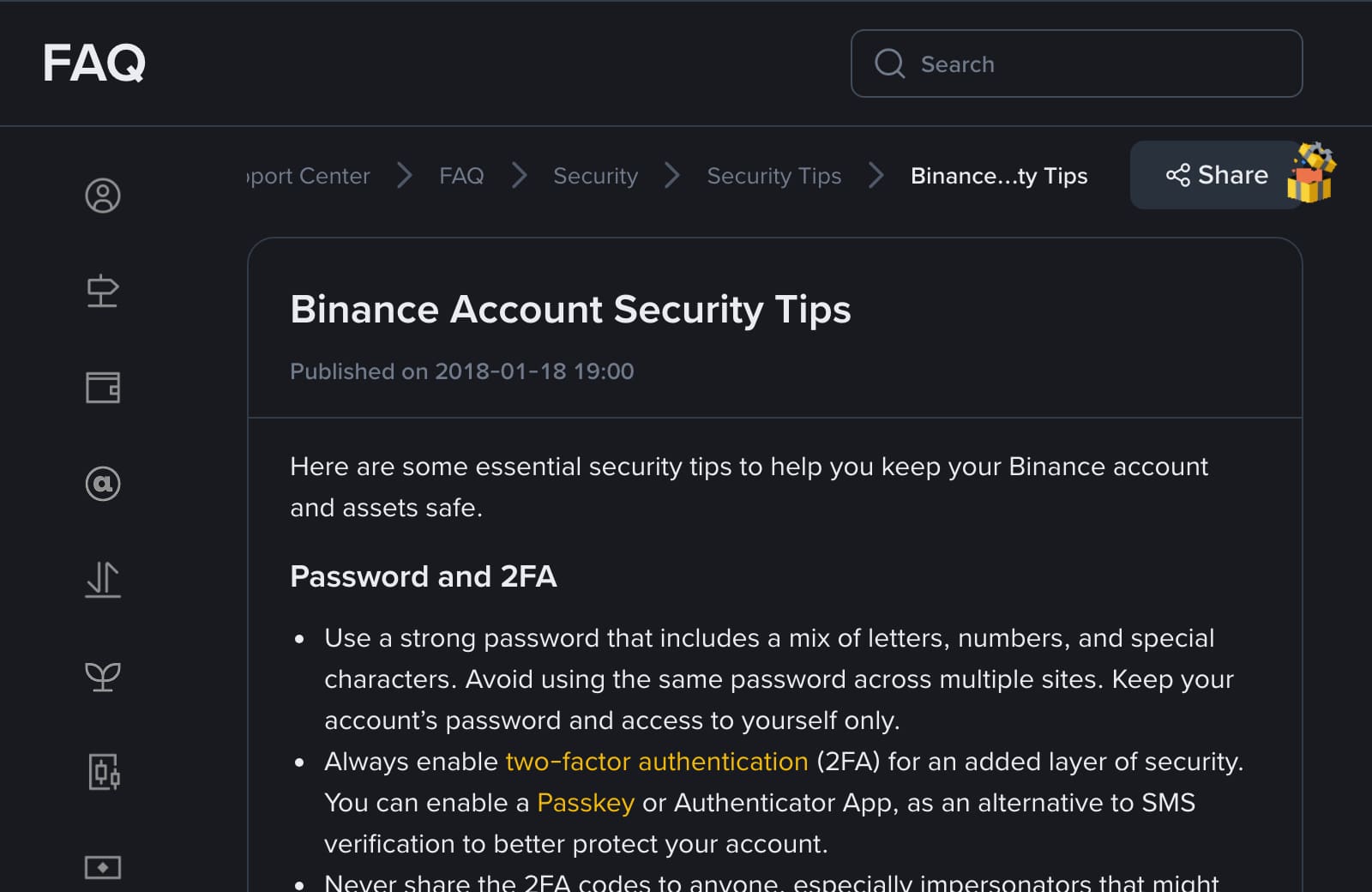
- Protect your sign-in.Use a password you do not use elsewhere and enable a passkey or authenticator app. Protect your linked email account too. Binance's security guidance[7] also recommends an anti-phishing code, which adds your chosen code to its emails.
- Keep codes and wallet secrets private.Never give anyone your password, verification codes, private keys or wallet recovery words. Do not transfer money because an unsolicited caller or message says it will protect your funds.
- Act on suspicious activity.If you have shared a password or code, contact Binance Support through the app or official site immediately. For unfamiliar account activity, Binance says to disable the account and report it through official support[7].
What happened
Binance customers should follow verified company updates after a seller advertised an unverified collection of 335.9 million records. Binance says the listing is likely a scam and that its investigation continues. Open the app yourself before acting on a message about your account. The exchange gave its response to crypto.news.[1]
On 9 November, BleepingComputer reported[2] that a seller using the ShinyHunters name was offering alleged identity documents, passwords, email addresses, phone numbers, transaction histories and wallet private keys. The publication believes the seller is impersonating the group; that identity is not established.
- Status
- Binance disputes the claim and calls the listing a likely scam.
- Advertised size
- 335.9 million lines of data, unverified.
- Asking price
- US$900,000.
- Confirmed victim count
- Not established.
This allegation is separate from the 29 October attack on Binance's wallets[1]. The denial here concerns the advertised customer data.
The full story2 more sections
Why Binance disputes it
Binance told BleepingComputer it found no evidence of a compromise connected with this listing. It also told crypto.news[1] that it does not keep passwords in readable form or hold private keys for customers' external wallets. The advert also names jurisdictions where Binance says it no longer operates.
Security firm Brandefense judged the offer more likely to be recycled data or a scam. But its 3 November analysis[3] explicitly says it had not opened or tested a sample. That assessment does not establish whether any records are genuine.
Who is affected
This is one for Binance account holders to monitor. The advertised number is a count of claimed data lines, not a verified number of people. There is no established victim count in the reporting reviewed for this story.
Our advice is to watch for messages that use the claim to pressure you. Binance's phishing guidance[5] describes fake support contacts and messages urging customers to move money to a supposedly secure wallet. That is a known scam pattern, not evidence of a campaign tied to this listing.
Timeline
-
HARD publishes its article, at Watch.
After the news
- Every data breach who was hacked, and how to check if you’re in one
- Data breach settlements the claims open now, by deadline
References7
- ^ crypto.news (). “Binance calls ShinyHunters’ alleged 335 million user data breach a likely scam”. Full indexed report read: Binance's continuing investigation, stated inconsistencies and distinction from the October wallet attack.
- ^ BleepingComputer (). “Binance denies data breach after alleged ShinyHunters claims”. Full indexed report read: direct Binance spokesperson response, alleged contents and suspected impersonation of ShinyHunters.
- ^ Brandefense (). “Binance Data Sale Claim: 335 Million Records, Claimed vs Plausible”. First-hand examination of adverts establishes the claimed line count and US-dollar asking price; researchers explicitly did not test a sample.
- ^ The Defiant (). “Binance Says 335.9 Million-Record Breach Claim Is Likely a Scam”. Headline and standfirst read; they support the disputed claim and asking price, but the article body did not load.
- ^ Binance (). “How to Prevent Phishing Attacks”. Documents support impersonation, fraudulent secure-wallet requests and the limits of verifying a spoofed sender.
- ^ Binance (). “What is Binance Verify?”. Explains how customers can check links, email addresses, phone numbers and social accounts against official Binance sources.
- ^ Binance (). “Binance Account Security Tips”. Official guidance on unique passwords, passkeys, authenticator apps, email security, anti-phishing codes and responding to suspicious activity.
Situation Room articles are updated as events develop: updates are added to the timeline, and never edited away. Follow them by email or RSS.