

Fandango’s checkout breach puts payment cards at risk
Fandango warns customers of payment card exposure at its ticket checkout
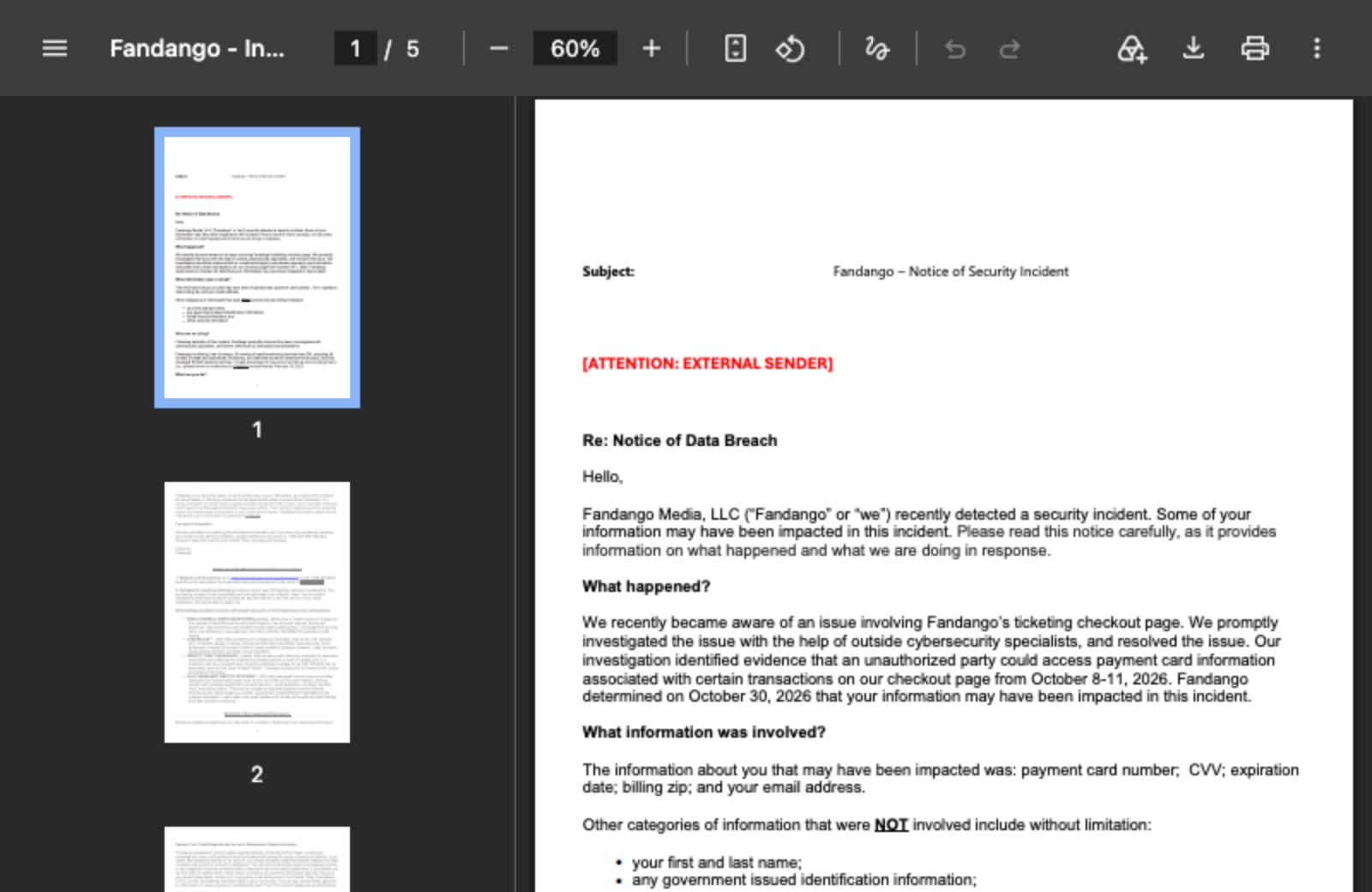
Potentially exposed details include card numbers, security codes, expiry dates, billing postcodes and email addresses. Fandango says it resolved the checkout issue and was unaware of related fraudulent use when it issued the notice.
What to do this week
- Find the card you used.Check your booking receipt and card account for any purchase made between 8 and 11 October 2026. If you received a notice, contact the issuer through your banking app or the number on your card. Explain the possible exposure and ask whether it should replace the card.
- Review transactions now.Look for unfamiliar purchases, including small amounts. Turn on transaction alerts where available. If you help a parent manage their banking, go through the account together.
- Report anything suspicious promptly.Ask the issuer to investigate and secure the card. Keep a record of the report and its reference number. ASIC’s Moneysmart guidance[5] says contacting the bank quickly helps it stop further unauthorised transactions.
- Follow through after replacement.Update recurring payments linked to the old card. Review the monitoring offer using your notice, but keep checking transactions yourself.
What happened
If Fandango has sent you a breach notice, check the card you used to buy tickets. The company says an unauthorised party could access payment information associated with certain checkout transactions. Its customer notice[1] describes possible exposure, rather than confirmed theft of every recipient’s details.
BleepingComputer reports[2] that malicious code captured card details at checkout. Fandango’s notice does not specify that method.
- Severity
- High
- Transaction window
- 8–11 October 2026
- Potentially exposed
- Card number, CVV security code, expiry date, billing postcode and email address
- Customers affected
- Number not disclosed
The full story2 more sections
Who is affected
The notice concerns certain ticket-checkout transactions. Fandango says names, government identification, Social Security numbers and other account information were not involved. On 30 October, it determined that recipients’ information might have been affected.
Credit monitoring has limits
Fandango offers recipients 24 months of free IDX credit monitoring, with activation due by 13 February 2027. The notice is written for US customers, so check it for eligibility if you are elsewhere. But credit monitoring does not flag fraudulent spending on an existing card, as the California Attorney General explains[3]. Keep checking the account itself.
A clean statement today is no reason to stop watching. The US Consumer Financial Protection Bureau[4] warns that fraudulent transactions can appear months after card information is stolen.
Timeline
-
HARD publishes its article, at High.
After the news
- Every data breach who was hacked, and how to check if you’re in one
- Data breach settlements the claims open now, by deadline
References5
- ^ Fandango, hosted by the California Attorney General. “Fandango – Notice of Security Incident”. Primary customer notice: scope, dates, information involved, response and IDX offer.
- ^ BleepingComputer (). “Fandango says hackers stole payment card details from checkout pages”. Reports customer notifications, a checkout skimmer and an undisclosed affected-customer count.
- ^ California Attorney General. “Breach Help: Tips for Consumers”. Explains card monitoring, transaction alerts and the limits of credit monitoring.
- ^ Consumer Financial Protection Bureau (). “Watch accounts closely when card data is hacked”. Supports checking small transactions, reporting fraud, replacing cards and updating automatic payments.
- ^ ASIC Moneysmart (). “Bank transaction problems”. Australian guidance on promptly reporting suspicious transactions and retaining a reference number.
Situation Room articles are updated as events develop: updates are added to the timeline, and never edited away. Follow them by email or RSS.